Showing posts with label fashion history. Show all posts

Thursday, July 26, 2007

my new favorite blog


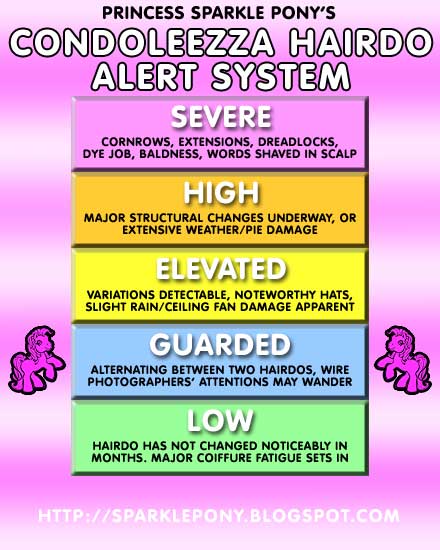
princess sparkle pony

"I keep track of Condoleezza's hairdo so you don't have to."


It's like Wonkette + Barbie + My Little Pony.

Recent posts include some great material commemorating Tammy Faye including audio from a children's album (of Bible songs and stories) that Tammy and Jim recorded in the 1970s and described in this way:
This fantastic album consists of ten songs sung in a shrieky fake little girl voice and two stories told by Jim 'n' Tammy and all their puppetland friends. The stories are my favorites, because the musical background is so off-the-wall, at points it almost sounds like Captain Beefheart is providing the accompaniment.
The Princess also scores an exclusive interview with one of John McCain's "notoriously gay sweaters":
PSP: Were you the first gay sweater on his staff?
MGS: No, there were others. There was a small coterie of gay outerwear ...
Check out the educational posts on Fashion/Beauty history such as the evolution of Harriet Miers hairdo. (Shear Genius take note.)

Want more? Hilarious photoshopping.

Thursday, November 02, 2006

laura's v-spot

vionnet + valentino
note: I'm still making corrections. sorry about the mess.


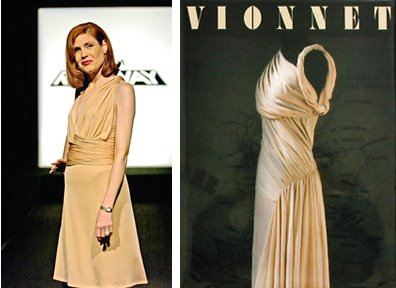
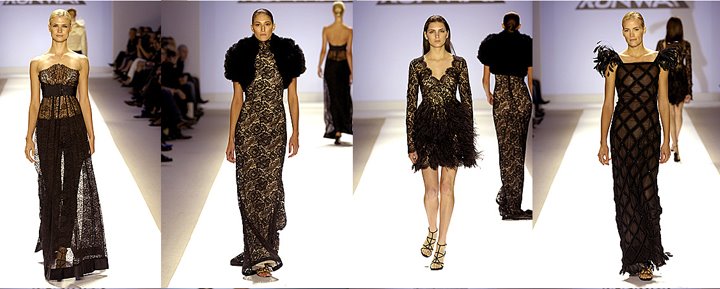
My previous post focused on the specific pieces in Laura's runway show. (Click here to go to the first post.) In this post I'm going to discuss how Laura's style relates to two important fashion designers: Madeline Vionnet and Valentino. By the way, I don't discuss Laura and fashion history because I think she is derivitive or imitative. I talk about Laura and fashion history because she is better informed -- in terms of both style and technique. This knowledge makes her work more interesting (and her imagination less limited) compared to the other designers.
Note: I have already discussed Laura's runway show in terms of the flapper look and early twentieth century fashion designers, specifically Paul Poiret. If you want to look at these posts go to:
early 20th century fashion history :

1. vionnet

Madeline Vionnet (1876-1975) ) is the designer known as the "queen of the bias cut." She began work as a seamstress at age eleven and apprenticed for fashion designers Jacques Doucet. She had her own fashion house and a boutique in Paris during the 1920s and 1930s, retiring in 1939.

She is admired for her distinctive draping technique and her innovative bias cut designs. Working primarily with chiffon, silk, and crepe, her designs allowed for greater stretch which provided greater comfort while moving fashion towards a greater fluidity of line and an emphasisis on the woman's body.


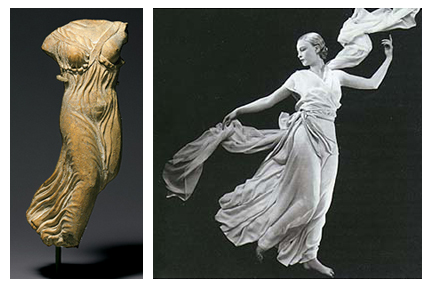
Madeline Vionnet was particularly inspired by the style of ancient Greece and the way that fabric draped on Greek statues:

Above left: Metropolitan Museum of Art, New York, From the permanent collection. Statuette of Nike (personification of victory), late 5th century B.C.
Above right: Metropolitan Museum of Art, New York. From the exhibit "Goddess"; Crepe dress by Vionnet. Vogue, November 15, 1931.George Hoyningen-Heune, Condé Nast Publications Inc.

Note: click here to go to my previous discussion of the role of ancient Greek art in how early twentieth century fashion reconceived the shape of the body.
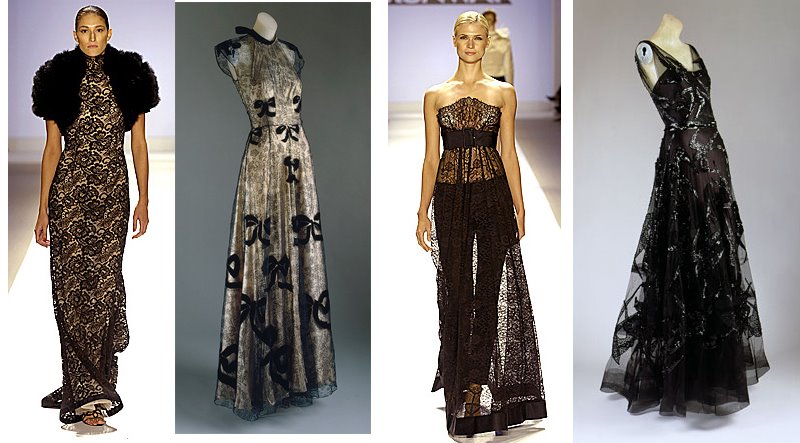
Not all of Vionnet's garments were simple draped chiffon. She also used lace, velvet, net, applique, beading and sequins to make some of the most elegant and even extravagant dresses of her time.

Above images, left to right: 1. Laura Bennett. 2. Evening gown, 1939. Madeleine Vionnet Pale pink lamé and black silk lace appliquéd with black silk velvet. Metropolitan Museum of Art Costume Institute. 3. Laura Bennett. 4. Evening Dress, 1938 Madeleine Vionnet. Black silk satin and black silk net embroidered with black sequins. From the special exhibition: Blythe Spirit: The Windsor Set: November 1, 2002–February 9, 2003.
Madeline Vionnet is one of the most admired fashion designers and yet she is also the most elusive. She disliked public appearances. She thought attention should be focused on her work, not herself. She was particularly contemptuous of the faddishness of the contemporary fashion world where styles went in and out of fashion from season to season:
"Insofar as one can talk of a Vionnet school, it comes mostly from my having been an enemy if fashion. There is something superficial and volatile about the seasonal and elusive whims of fashion which offends my sense of beauty."
a couple of recommended books:


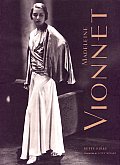
Madeline Vionnet by Betty Kirke


2. valentino
= a fashion house started by Valentino Garavani (1932 - )

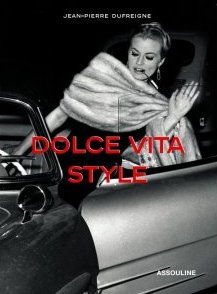
Biographical information: At age 17 Valentino Garavani moved to Paris from his town in northern Italy and began his apprenticeship with Jean Desses and Guy Laroche. In 1959 he opened his first fashion house in Rome. One year later he teamed up with Giancarlo Giammetti who is the commercial manager of the house of Valentino. Valentino is an immediate sensation: he is the designer for the world of La Dolce Vita.


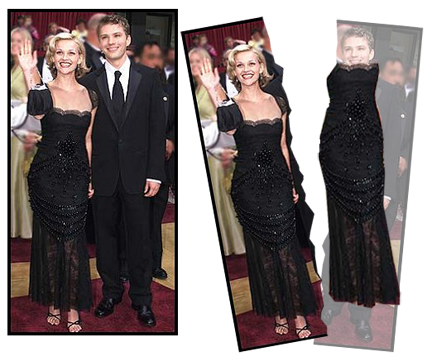
In 1968 he designs the wedding dress for Jacqueline Kennedy's marriage to Aristote Onassis catpulting him into the fashion stratosphere. Between then and now he has won every award possible and it is hard to argue that he is not Italy's greatest living designer. Valentino now has a broad fashion empire but the House of Valentino designs one thing: evening gowns. In that he is preeminent. I don't think any designer has more dresses, new or vintage, on the red carpet than Valentino.

A couple ideas for an advertising campaign for vintage Valentino:

Vintage Valentino:
A dress so memorable that they may even forget that the woman wearing it was a blithering idiot.
. . .
Vintage Valentino:
After the love is gone, the dress remains.

Valentino has also been known to admonish stars for going out into public looking sloppy -- if not sleazy. He believes that stars have an obligation to their public to be glamorous:
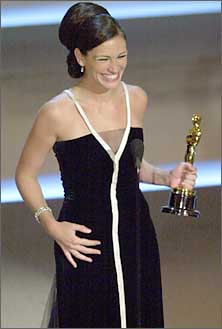
Italian fashion designer Valentino Garavani slammed Julia Roberts and Cameron Diaz for their fashion style, claiming they look like 'homeless bag ladies' compared with Hollywood stars from the past.

Valentino, 73, who dresses famous actresses like Gwyneth Paltrow and is often seen on the red carpet with her, declared that celebrities today should always look glamorous, not only when they are invited to parties or award shows.

The designer told German newspaper Die Ziet: "Today you see Julia Roberts and Cameron Diaz running around looking unkempt in jogging trousers, they look like bag ladies, like homeless people. In the past, actresses had to commit in their contracts to appear in public like stars when they left their homes.

Given that Laura does not own a pair of jeans, what could be more Laura than that?

In addition to sharing the belief that glamour is not merely a fashion choice but an obligation, dammit!!Laura also shares Valentino's classicism. In a certain way (a perverse way, granted) there is a frugality to that idea of elegance in that it isn't faddish: if you are going to buy then make sure it is something that is going to be worn for the rest of your life.

When Heidi said that Laura's dresses are the kind that a woman has in her closet for the rest of her life she could not be making a statement that said more about how Laura takes her fashion cues from a designer such as Valentino.

But that doesn't make Laura completely imitative of Valentino as a designer. If you look at the two rows of dresses below what is most remarkable is that they seem so similar and yet each piece is completely different. Laura's pieces were evocative but not derivative.


a couple of recommended books:


Fashion Memoir: Valentino


3. vamp??

Did this dress remind anyone else of Morticia Addams?? (For the record, I consider the comparison to be a complimentof the highest order.)

It just seems like the perfect dress for the woman who would say:
"I'm just like every modern woman trying to have it all. A loving husband, a family. I only wish I had more time to see out the dark forces and join their hellish crusade. " (What a great line. All hail Paul Rudnick.)
You also have to appreciate the irony that it was Laura and not Jeffrey who sent the best goth look down the runway.

And forget the bikinis and babydoll looks: that dress' back with its slinky fishtail swish provided the sexiest look in all four shows.

Saturday, September 23, 2006

harem pants

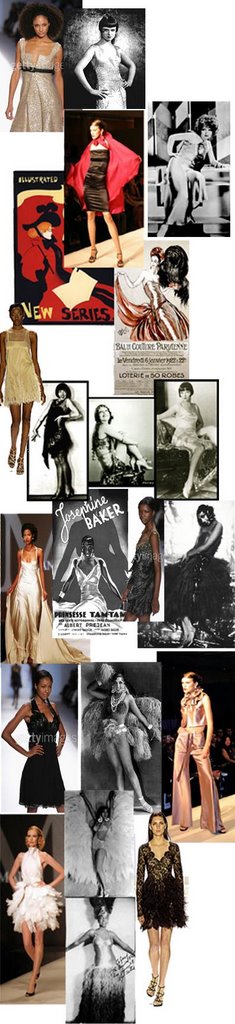
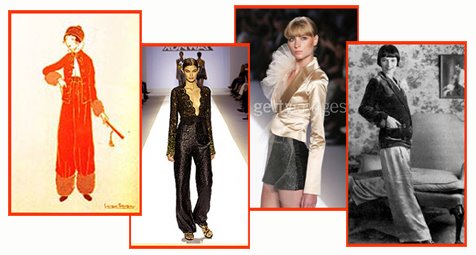
In 1909 Paris was gripped with a passion for "orientalism"--a style that was in fashion due in large part to the arrival of the Ballet Russe. In the same year the innovative fashion designer Paul Poiret--who had already produced fashions that evoked Eastern styles of dress--and introduced "harem pants," which became one of his signature pieces.

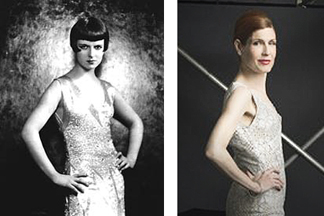
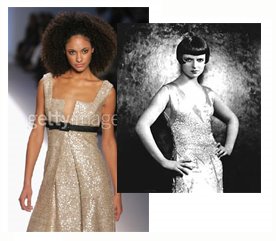
Above: Paul Poiret, Laura Bennett, Laura Bennet,
and a photograph of Louise Brooks
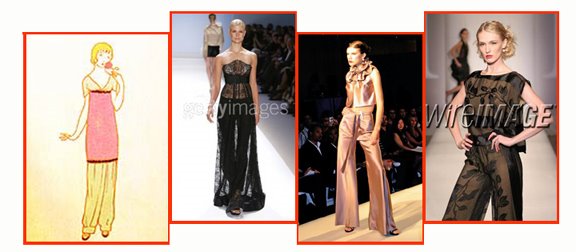
Below: Paul Poiret, Laura Bennet, Malan Breton,
Malan Breton

Harem pants became a signature style of the modern "new woman" and were worn by Hollywood "flapper" icons such as Louise Brooks (photos above: top row, far right).

This effort to put women into trousers was more successful than "bloomers" (named after the early feminist Amelia Bloomer [below, left]) which were part of the nineteenth century dress reform movement.
Harem pants were less like underwear than bloomers but more like lounge- or leisure-wear than the tailored trousers donned by Katherine Hepburn and other women in the 1930s and 40s.

further information:

Friday, September 22, 2006

flappers, follies & feathers 1 : contexts

early 20th century fashion on today's runway

some history : arts | fashion
These posts are still in need of some tweaking and editing but the basic information is now up. To check these out as separate pages click on the individual topics or just click arts | fashion and read them all at once.

    Monday, September 18, 2006

    josephine baker

    now up:
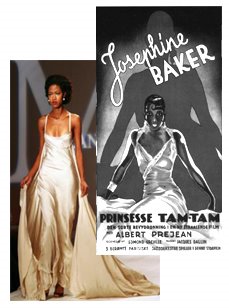
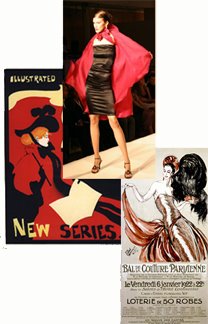
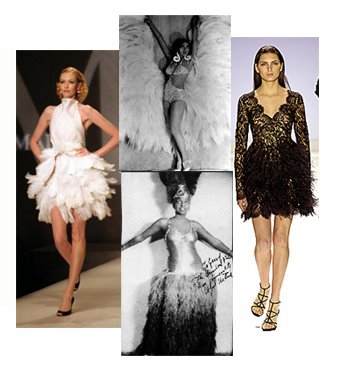
    • josephine baker (1906 - 1975) : American born; naturalized French citizen: a performer best known for starring roles at the Folies-Bergère and Ziegfeld Follies in the 1920s and 1930s. She performed in floor shows, revues, operettas, and films as a singer as a comedienne, actress, and, especially, as a dancer. She is best known for two of her exotic dances: her "jungle" dance where she wore nothing but a string of bananas around her waist and another where she wore only a skirt of feathers entitled 'La Danse de Sauvage' but was actually the Charleston . . . click here for a longer biographical sketch.
    coming soon:
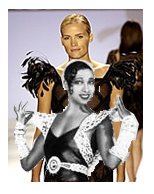
    • josephine baker & project runway designers

    stuck in the past

    is it impossible to update jackie o?

    While I'm on the topic of updating the look of fashion icons, I want to return to the Iconic Statement challenge.

    It seems like definition of Jackie O's style is limited to a few years of her life. Ironically it is the period when she did not have the"O".
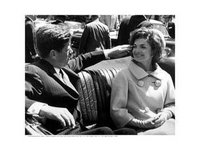
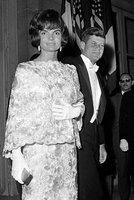


    Even when she was alive she was fixed in the past for the sake of American's nostalgia for "Camelot."

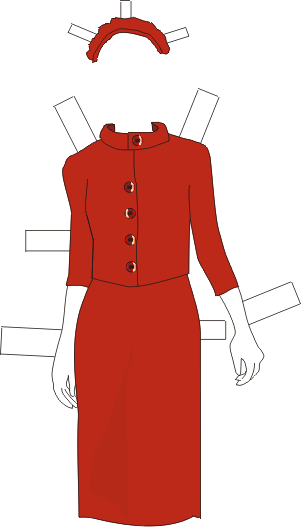
    The challenge in "Iconic Statement" (Episode 5) was for the designers was to "update" the look of a fashion icon and not to make a replica costume.
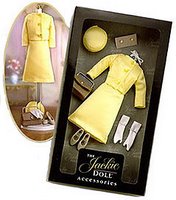
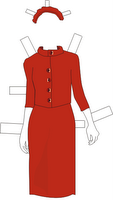


    But is it possible that the judges may not have been open to the idea of updating this icon? If they can't allow her to move her out of the '60s then how can they request that her look be updated to the present time.

    One complaint the judges had about Robert's suit was that it wasn't tailored enough. They insisted that Jackie O never wore anything that wasn't highly structured.
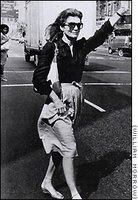
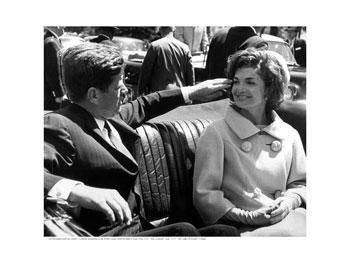
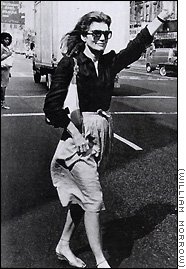
    Here (right) is a photograph of Jackie O dressed in looser style clothes than the box suit that she made famous in the sixties.

    And, lest we forget, her designer was Oleg Cassini after all. What about a track suit??!!


    Here are two runway approaches that we can compare to Robert's attempt to update the Jackie O look.
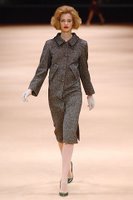
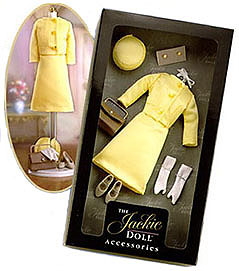
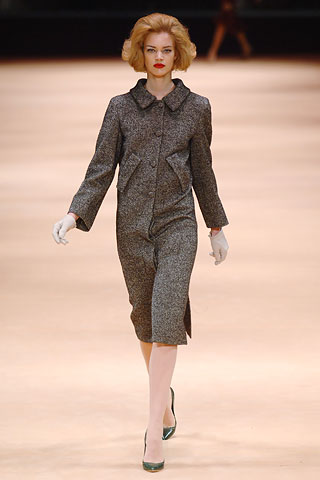
    In Fall 2005 Alexander McQueen used Jackie O as his inspiration. The look he created (right) is a costume, right down to the hair and the white gloves. There's no updating it is primarily a recreation of a look. It is an appealing look but this is not especially innovative design work.
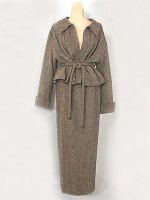

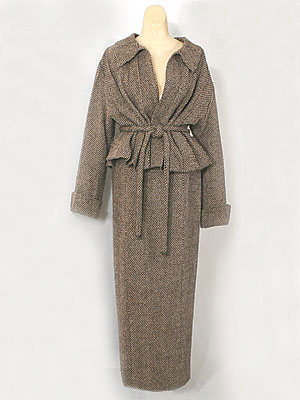
    On the other hand, this Chanel 1998 suit ( right) is a much more unstructured version of the structured, boxy, tailoring we associate with the Chanel suit. It isn't specifically addressing the Jackie O look but the endeavor is similar.
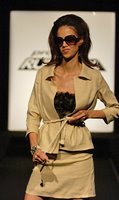
    Considered in this light, Robert's updated Jackie O suit doesn't seem so off-base.

    At least it wasn't deserving of the outrage heaped upon him for being so off-base.

    Robert's biggest error was in taking fabric from Vincent (what was he thinking??!!!).

    His first choice of Tiffany blue fabric was lovely and if he'd stuck with this his suit would have looked more youthful and made more of an impression.
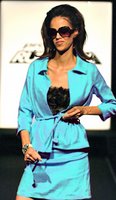
    Robert didn't lose this episode but it was the one when the judges really turned against him. This was the episode when Bradley was auffed -- and appropriately so. The poor guy didn't have a clue about Cher and what he made was ridiculous.


    Oh, and -- following up on my repeat offenders post, what did Vincent do for that challenge?
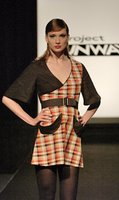
    Update Twiggy.

    Right. That look is spot-on --

    if Twiggy wore halloween-themed apron projects from the country crafty shoppe.

    No wonder he talked about her as if he thought she was dead. She wouldn't have been caught dead in something like that.

    Tuesday, September 05, 2006

    the hobbien mysteries

    "Doesn't this kinda look Holly Hobbie?" -- Tim Gunn

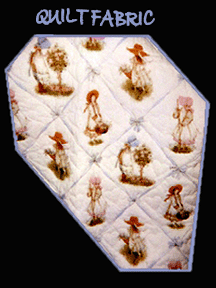
    Oh, Tim Gunn. You are wise in many ways, but there are some mysteries of which you do not know. Beware Tim Gunn. Do not scoff at a power higher than even your own. You have tread upon the sacred territory of American femininity. The Way of Holly Hobbie takes many forms and wields great power over many worlds. And yes, Tim Gunn, it is even woven (to be more accurate I should say it is quilted) into the fabric of the world of fashion. But more importantly, The Way of Holly Hobbie is a journey of the soul.


    ---------------------------------

    the way of holly hobbie: her return

    her arrival is welcomed by multitudes.

    American Greetings Corporation first introduced Holly Hobbie in 1967. She reached her peak in the late 1970s. Just last year (2005) they brought the "classic" image of HH back into production.

    You can find out about the history of Holly Hobbie here:
    http://www.hollyhobbie.com/HollyHobbie/history.do

    This site includes information about the new incarnation of HH: her great-granddaughter, who has long blond hair and instead of a bonnet she wears what I call a "Fat Albert" hat (not to be confused with a Mush Mouth hat).
    ---------------------------------

    Angela seems to be more into the look of the great-granddaughter rather than the original Holly Hobbie, given her fondness for the Fat Albert Hat:

    2006


    ----------------------------------------------------------------------------

    the way of holly hobbie: rituals and mores

    Sewing was a significant aspect of the Holly Hobbie world. Making dolls and quilting were two a popular projects. You could even buy a HH child's toy sewing machine.


    "Traditional home crafts" were an important aspect of Holly Hobbie. It was all about the hand-made. These practices instilled the domestic object with the aura of its maker. Objects were created with care -- often made together as a socially bonding activity -- and were usually intended as a gifts. They were endowed with the power to strengthen relationships, especially women's and girls' friendships and mother/daughter bonds.

    This is a world without fathers, without adult men. The only males that appear in the imagery are usually younger brothers or non-sexual but romantic boys.

    ---------------------------------

    Like "Little House on the Prairie" HH romanticized the time and place and life of early pioneers. (Like that was a great time to be female in America.) The aesthetic was sentimental and nostalgic for the "simple joys of childhood." Puppies and kittens frolicked. All children were well-behaved, rosy-cheeked, productive, and white and pure as the clouds of glory that they trailed.

    Of course, this romantic nostalgia for childhood and the idealized past is hardly new.

    ---------------------------------

    the way of holly hobbie: wait . . . what?

    The renewal of interest in Holly Hobbie is a nostalgia for the already nostalgic. (Note to self: that could be a future topic for kih | letters.) I'm curious about why she is being re-introduced now. What is the current fascination all about?

    I also think Holly Hobbie may have also been a reaction to the non-traditional career woman that was voicing itself in American culture. At the same time, and paradoxically, Holly Hobbie was a translation of the seventies, living-with-nature, post-hippy independent natural-woman into an image that appealed to middle American suburban girls.

    Laura Ingalls Wilder. Macrame. Fern Bars. Knee Socks. Carol King.

    I'm sure it all made sense at the time.

    --------------------------------------